This week, DVA reaches a significant milestone, 50 years of supporting the veteran community. We're taking this moment to profile individuals and reflect on how our support has steadily evolved beyond healthcare and compensation.
Meet Emily Pyke, the CEO and co-founder UndaTech, an Australian veteran and women-led company that develops fire-resistant protective base layers for Defence, emergency services and high-risk workforces.
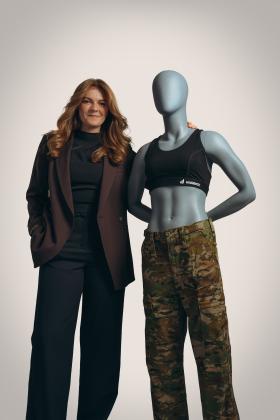
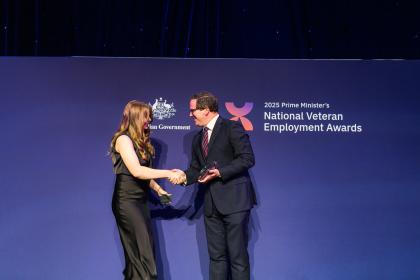
In 2025 Emily won a Prime Minister’s National Veteran Employment Award in the Veteran/Partner Entrepreneur of the Year category. The awards are part of our Veteran Employment Program. Established in 2023, the program delivers initiatives to improve employment outcomes for veterans as they transition out of the Australian Defence Force (ADF). It focuses on assisting and encouraging employers to recruit and retain veterans.
‘Programs like the Veteran Employment Program tell veterans that their service is an asset, not a gap in their CV, and that transition is a beginning, not an end.
For those of us who chose to start a business rather than join one, programs like this and the networks around them have provided mentoring, connections and credibility that every early-stage founder needs, and that many veterans don't always know how to ask for.’
The strengths veterans bring to the workplace are numerous, Emily says.
‘Veterans are used to operating with incomplete information, under pressure, with real consequences attached. That can translate directly into calm and calculated decision making, with the drive to stay on task. Veterans also tend to be exceptionally good at systems…
I left the Royal Australian Navy after 13 years with no formal degree and no training outside what the ADF gave me, but the diversity of that career is what I now draw on every day in building my own company. It's the reason veterans should be in high demand as one of our most capable employee/workforces.’
Emily is keen to bust misconceptions too.
‘One misconception I still encounter is that veterans are rigid and inflexible. Service teaches initiative and adaptability, and veterans are used to adjusting quickly when circumstances change.
Another is the assumption that veterans are somehow damaged by their service. Many face real challenges and deserve proper support…Every veteran's path after service is different, and
employers get the most from that experience when they ask about the person rather than assume the story.’
Her final message for employers and veterans across the country for our 50th anniversary is a powerful one:
‘To veterans, the discipline, judgement and care for your team that you developed in service are exactly what Australian workplaces and communities need. Don't wait for permission to bring them to the table.
To employers, the veteran talent pool is one of the most capable and underused in the country, and the businesses that recognise this early will have a competitive advantage. The next 50 years will see more women, more founders and more diverse service experience in the veteran community, and I look forward to seeing DVA continue to grow with it.’
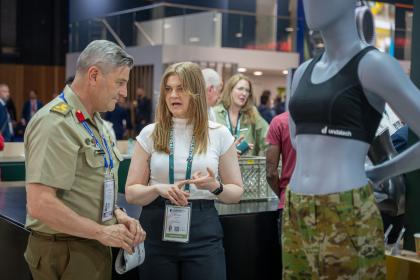
Our support for Emily shows how we’ve moved towards caring for veterans holistically rather than just providing healthcare and compensation. This includes caring for them critical junctions in their lives — such as the moment they separate from the ADF. Although things may have changed, our purpose remains the same, supporting veterans and the families of veterans with care, respect and commitment.
Find out more:
-
Visit the Veteran Employment Program page.
-
Read about the evolution of DVA over the past fifty years.
-
Meet other veterans, including Edward who benefits from the Psychiatric Dog Program and Ken who benefits from the Rehabilitative Assistance Program.