This week marks 50 years since the Department of Veterans’ Affairs (DVA) was formally established. On Monday 5 October 1976, the Department of Repatriation became DVA. Since that day, we’ve been evolving alongside Australia's veterans and the families of veterans.
Today, that work is substantial and continues to grow. In 2025–26, more than 52,000 veterans lodged claims and 238,389 health conditions were determined — the highest number recorded. Around $15 billion was provided through compensation, healthcare, treatment and other services for veterans and families of veterans.
Historical trends highlight how we’ve adapted to better support the veteran community and respond to its changing needs. There has been:
-
a shift away from a focus on repatriation and compensation to providing holistic support - including for mental health, rehabilitation, recovery and transition
-
a stronger recognition that service affects families as well as veterans
-
more support for new generations of veterans as they emerge
-
a growing understanding of different types of service and their impacts
-
introduction of innovative models of care
-
a digital transformation to make it more convenient for veterans to conduct their business.
While much has changed, our purpose remains the same: supporting veterans and the families of veterans to live well after service, with care, respect and commitment.
Take a glimpse at the defining moments of DVA history:
1970s
| 1976: The Repatriation Department became DVA, bringing an increase in responsibilities. We inherited the administration of the Defence Home Owner Scheme and the War Graves Commission. |
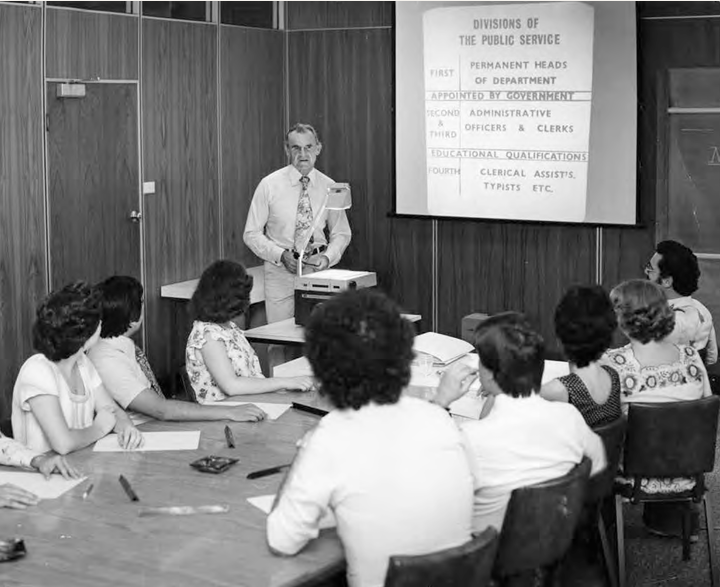
Photo: Staff at the Sydney office in the 1970. Copyright: DVA. |
1980s
|
This decade brought in new technology and support was broadened for Vietnam veterans. 1983-1985: The Royal Commission on the Use and Effects of Chemical Agents on Australian Personnel in Vietnam took place. 1984-1985: The Royal Commission into British Nuclear Tests in Australia was undertaken. 1986: The Veterans’ Entitlements Act (VEA) was introduced to cover operational service (warlike, non-warlike, peacekeeping and hazardous service). 1988: The Safety, Rehabilitation and Compensation Act (SRCA) was amended to include ‘a member of the Defence Force’ as an employee of the Commonwealth. |

Staff at the Canberra Office in the 1980s. Copyright: DVA. |
1990s and 2000s
|
Rehabilitation took centre stage and new programs began to meet the changing needs of older veterans. 2004: The Military Rehabilitation and Compensation Act (MRCA) introduced a modern approach to rehabilitation, recovery and support. |
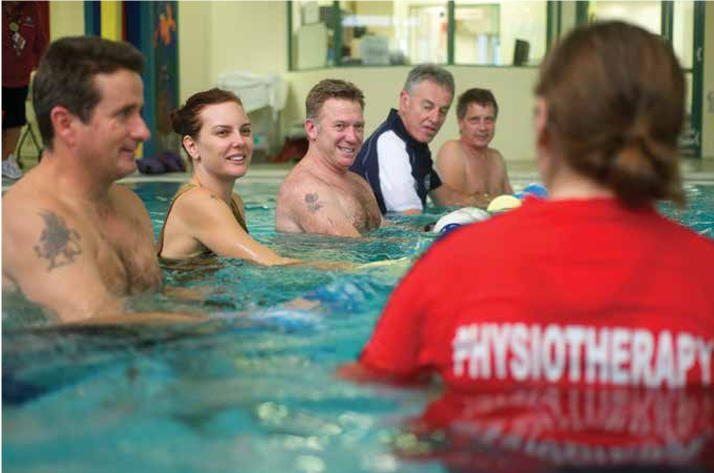
Veterans at physiotherapy. Copyright: DVA. |
2010s
|
New initiatives supported veterans deployed to Afghanistan, Iraq and on peacekeeping operations. Digital transformation accelerated, introducing online services and modernising systems to improve access to support and information. 2015: We assisted in the planning and running of commemorative events to mark the 100th anniversary of Australians landing at Gallipoli. 2017: The Safety, Rehabilitation and Compensation (Defence-related Claims) Act, also known as the DRCA, was introduced to cover training injuries, garrison service and day-to-day injuries
|

In 2017, staff at the Woden office learned about the new ‘information point’ designed to increase awareness of services available. Copyright: DVA. |
2020s
|
We strengthened our focus on suicide prevention, simplifying the claims process, transition support and family-centred services. 2021: Governor-General, His Excellency General the Honourable David Hurley AC DSC (Retd), issued Letters Patent, which established the Royal Commission into Defence and Veteran Suicide. 2024: The Australian Government agreed/agreed-in-principle to 104 recommendations of the Royal Commission and noted 17 for further consideration and one not supported in part. |
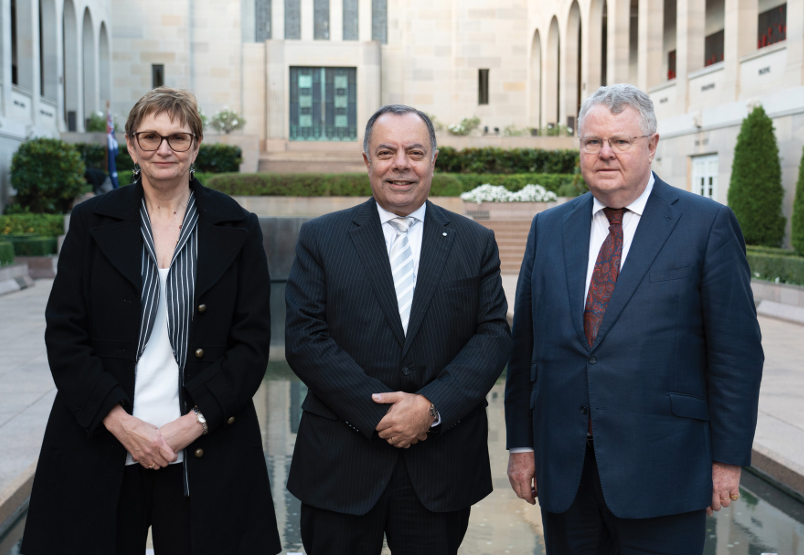
Royal Commissioners Dr Peggy Brown AO, Nick Kaldas APM and the Hon James Douglas KC photographed in front of the Pool of Reflection at the Australian War Memorial. Copyright: DVA. |
2026
|
1 July: We established the Veteran and Family Wellbeing Agency in response to Recommendation 87 of the Royal Commission into Defence and Veteran Suicide. The agency makes it easier for veterans and families to find and access the support they need. Also on this day, we implemented a major legislation reform to create a simpler claims system for the veteran community. A single ongoing Act, the MRCA, applies to new compensation and rehabilitation claims going forward. 9 September: The Royal Commission Government Response was expanded to update the response to 15 recommendations. There is now a total of 113 recommendations which have been agreed or agreed-in-principle, with a further 8 recommendations noted. |

A family enjoying a day in the park. Copyright: DVA. |
Find out more
The history of veteran support in Australia stretches back more than 50 years. For more detail we recommend the following publications:
- Payton, P. 2019, More Than the Last Shilling: Repatriation in Australia 1994–2018, Department of Veterans' Affairs, Canberra.
- Payton, P. 2018, 'Repat': A Concise History of Repatriation in Australia, Department of Veterans' Affairs, Brisbane