The Tasmanian veteran needs assessment and wellbeing support service feasibility report

18 March 2026
Cover page of the Tasmanian veteran needs assessment and wellbeing support service feasibility report

the Tasmanian veteran needs assessment and wellbeing support service feasibility report

Cover page of Appendix 1: The project

Appendix 1: The project

Cover page of Appendix 2: Tasmania wellbeing support service study  Desktop review

Appendix 2: Tasmania wellbeing support service study — Desktop review

Cover page of Appendix 3: Consultation data

Appendix 3: Consultation data

Cover page of Appendix 4: Model feasibility

Appendix 4: Model feasibility

Overview

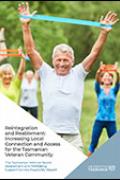
The Tasmanian Feasibility Study, commissioned by the Commonwealth and Tasmanian Governments, engaged with stakeholders, including veterans and their families, Ex-service Organisations and service providers to collect data on the current service delivery environment in Tasmania.

The study shows support for more accessible localised services for veterans and their families in Tasmania. 

Research Publication Type
Service Period

Vietnam Veterans Family Study (2014)

18 March 2026
Cover image of the Vietnam Veterans Family Study Volume 1: Introduction and Summary of the Studies of Vietnam Veteran Families

Volume 1: Introduction and Summary of the Studies of Vietnam Veteran Families

Cover image of the Vietnam Veterans Family Study Volume 2: A Study of Health and Social Issues in Vietnam Veteran Sons and Daughters

Volume 2: A Study of Health and Social Issues in Vietnam Veteran Sons and Daughters

Cover image of the Vietnam Veterans Family Study Volume 3: A Study of Mortality Patterns of Vietnam Veteran Families

Volume 3: A Study of Mortality Patterns of Vietnam Veteran Families

Cover image of the Vietnam Veterans Family Study Volume 4: Supplementary Studies of Vietnam Veteran Families' Experiences

Volume 4: Supplementary Studies of Vietnam Veteran Families' Experiences

Cover image of the Vietnam Veterans Family Study Media backgrounder

Vietnam Veterans Family Study Media backgrounder

Cover image of the Ex-Service Organisation Round Table (ESORT) Vietnam Veterans Family Study Feedback Paper

Ex-Service Organisation Round Table (ESORT) Vietnam Veterans Family Study Feedback Paper

Cover page of Spouses and Partners of Vietnam Veterans  Findings from the Vietnam Veterans Family Study

Spouses and Partners of Vietnam Veterans – Findings from the Vietnam Veterans Family Study

Cover page of Spouses and Partners of Vietnam Veterans  Summary of findings from the Vietnam Veterans Family Study

Spouses and Partners of Vietnam Veterans – Summary of findings from the Vietnam Veterans Family Study

Government response to the vietnam veterans family study 2014 - thumbnail

Government response to the Vietnam Veterans Family Study 2014

Overview

The Vietnam Veterans Family Study (VVFS) is the most significant research program ever undertaken by the Australian Government into the health of the families of Australia’s Vietnam veterans. The four volumes, released in 2014, examine the effect of Vietnam War service on the physical, mental and social health of the sons and daughters of Vietnam veterans. 

Over 27,000 people participated in the studies, including Vietnam veterans, partners and their children. Defence Force personnel of the same era who did not deploy to Vietnam, and their families, participated in the study as a control group.

A further report, titled Spouses and Partners of Vietnam Veterans – Findings from the Vietnam Veterans Family Study, was commissioned following consultation with the veteran community through the Ex-Service Organisation Round Table (ESORT). Feedback from stakeholders highlighted the importance of including spouses and partners in the VVFS analysis. 

Information about the consultation process, ESORT’s recommendations, and the Government Response can be found below.

Findings

The VVFS found that the majority of sons and daughters born to Vietnam veterans are leading healthy and productive lives. However, analysis found that the families of Australia’s Vietnam veterans are more likely to have considerable emotional, physical, and social issues when compared to families of those who served in that era but did not deploy to Vietnam.

When examining mortality amongst the children of Vietnam veterans, the research found that the children of Vietnam veterans and Vietnam-era personnel had lower mortality rates when compared to the general Australian population and that there were no significant differences in deaths from cancer. Sons of Vietnam veterans deployed had a higher mortality rate compared with Vietnam-era personnel from late teenage years to adulthood, largely due to external causes which include car accidents, misadventure and suicide.

To see the full reports released in 2014 please follow these links:

The report Spouses and Partners of Vietnam Veterans – Findings from the Vietnam Veterans Family Study confirms the long-term impact of Vietnam War service on family members. The two main areas that partners were faring less well in were mental health and couple relationships, though significant results were also found for perceptions of general physical health, perceptions of family relationships and socio-economic disadvantage.

The study confirms that veteran partners should continue to be considered in the design of early intervention supports to help reduce the long term impact of military service on families.

Support services

The research shows that operational service affects more than just the person who serves. It can also impact on family members which is why DVA has services to help families adjust and cope. Studies such as these help inform support programs and services.

For veterans and their families, support is available through Open Arms — Veterans & Families Counselling. Open Arms provides 24 hour, free and confidential counselling and support to veterans and their families. For more information, call 1800 011 046 or visit the Open Arms website.

Families can find out about support available from DVA on the website.

More information about mental health support is also available here.

Further information

For further information, see also:
First Author
Research Publication Type
Service Period
Subcategory Topic

What is the prevalence of risk-taking behaviours in the children of former or current military personnel?

16 March 2026
Overview

This literature review examines the evidence for the prevalence of risk-taking behavior by children of former or current military personnel. Risk-taking behavior is examined by focusing on the evidence for high-risk drinking, illicit drug use and pharmaceutical misuse, dangerous driving, unsafe sex, crime, delinquency and school absenteeism.

First Author
Service Period
Subcategory Topic

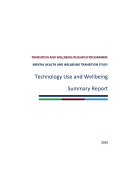
Transition and Wellbeing Research Programme - Technology Use and Wellbeing Report (2019)

16 March 2026
Overview

This report investigates technology and its use for physical and mental health programs.

The Technology Use and Wellbeing Report is one of the first studies worldwide to investigate the use of the internet and new and emerging programs and technologies that support the wellbeing and mental health of serving and ex-serving military members. Specifically, this report investigates technology and its use for physical and mental health programs, including implications for future health-service delivery in the ADF and veteran community.

This report is part of the Transition and Wellbeing Research Programme, which is the most comprehensive study undertaken in Australia on the impact of military service on the mental, physical and social health of serving and ex-serving ADF members and their families. The Programme is made up of three studies, with this report comprising part of the Mental Health and Wellbeing Transition Study. The other two studies are Impact of Combat and Family Wellbeing.

First Author
Research Publication Type
Service Period
Subcategory Topic

Psychological and vocational outcomes of delivering support services to the families of veterans at times of high family stress

18 March 2026
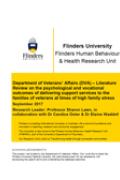
Literature review cover page

Psychological and vocational outcomes of delivering support services to the families of veterans at times of high family stress

Overview

This report was funded by the Department of Veterans’ Affairs to assess available literature on the psychological and vocational outcomes of delivering support services to the families of veterans at times of high family stress. The review considered interventions being provided to veterans in Australia, and other English speaking countries who may have similar veteran experiences.  

The literature review was undertaken in the context of the growing body of research and policy evidence suggesting that veterans can be challenged by transition from the Australian Defence Force (ADF) into civilian life, with a consequential direct negative impact on the wellbeing of the veteran and family members. The aim of this literature review was to examine available peer reviewed research regarding the support available to families of veterans in order to inform the establishment of a policy framework.

  • The review yielded 34 results, primarily considering the experiences of veterans and their families in the United States. The absence of peer-reviewed literature from New Zealand, Canada and the United Kingdom highlights that this topic is one that is still in its infancy.
  • Overall, studies indicated that family involvement in care was most definitely a contributing factor to veterans achieving positive psychological and interpersonal outcomes. The review noted that younger veterans, in particular, liked the message of family involvement, the use of digital support tools and therapy that accommodated childcare needs.
  • While the literature highlights some potential programs which could assist Australian veterans and their families, including online education tools for adults and children, the need for further research in this area is apparent, specifically in the Australian context.
First Author
Research Provider
Research Publication Type
Service Period

Mothers in the Middle East Area of Operations Study

13 March 2026
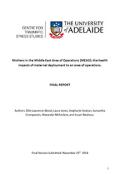
Cover of Mothers in the Middle East Area of Operations Study

Mothers in the Middle East Area of Operations Study

Overview

The health impacts of maternal deployment to an area of operations

The Mothers in the Middle East Area of Operations (MEAO) Study identifies health outcomes and psychosocial factors, including resilience, that impact on Australian servicewomen with dependent children who deploy and ways in which mothers could be better supported during and following deployment.

First Author
Research Publication Type
Subcategory Topic