110 years on – remembering battles of the First World War
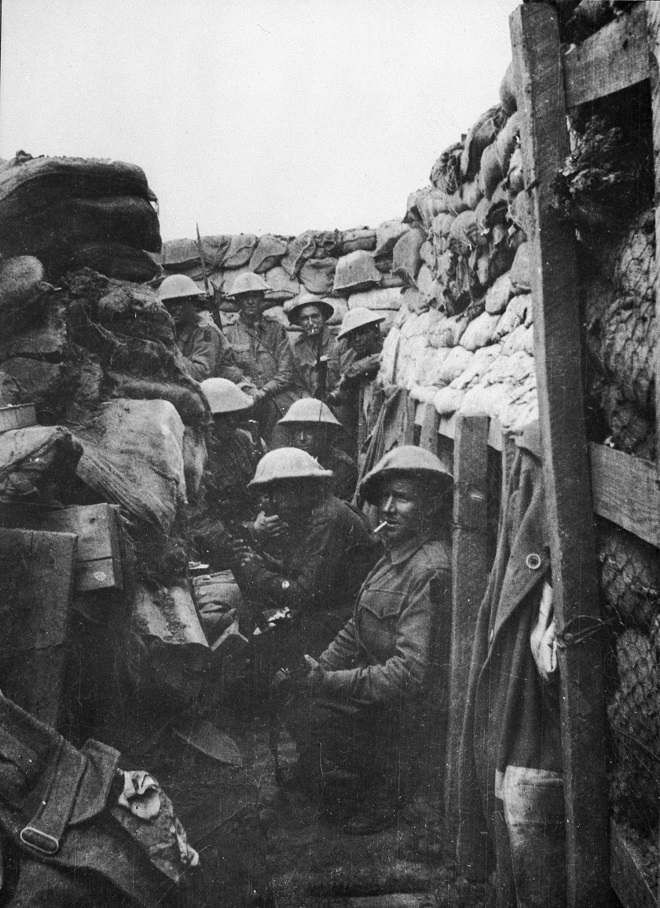
This year marks 110 years since Australians served in major battles in Europe and the Middle East during the First World War. On the Western Front, it included battles at Fromelles, Pozières and Mouquet Farm. In the Middle East, it included the Sinai and the Palestine Campaign, including the Battle of Romani.
The Battle of Fromelles, from 19 to 20 July 1916, was planned as a diversion to draw attention away from the Somme offensive. Australian troops faced a well-prepared enemy with strong defences near the village of Fromelles. The battle was a costly failure with more than 5,500 Australian casualties: almost 2,000 were killed in action or died from their wounds, and over 400 were captured in less than 24 hours.
Fromelles was one of the worst disasters in Australian military history. On 19 July, when the 60th Battalion mustered for roll call afterwards, only 106 men answered out of the 887 who had gone into battle.
On the morning of 20 July, while tending to the wounded in no-man’s-land, Private William ‘Billy’ Miles spoke with a German officer. The Germans proposed a truce while both forces collected the wounded, but orders were soon received to end the tentative truce. For 3 days and nights, men ventured into no-man’s-land, at risk of enemy fire, to bring in the wounded. Charles Bean, Australia’s official war historian, wrote this was ‘that magnificent tribute of devotion which the Australian soldier never failed to pay to his mates’.
As part of the Battle of the Somme, Australian troops gained control of the village of Pozières, where they became the target of concentrated artillery fire from German defenders and experienced some of their heaviest fighting of the First World War. Repeated attempts to capture nearby Mouquet Farm cost Australian Divisions more than 11,000 casualties before they were withdrawn. Over the course of 2 months, the Australian Imperial Force (AIF) had suffered 28,000 casualties at Fromelles, Pozières and Mouquet Farm.
While most of the AIF went to France in 1916, the mounted units remained in Egypt to continue the fight against the Ottoman Army. The Battle of Romani, from 3 to 5 August 1916, stopped the Ottoman threat to the Suez Canal, a vital supply route, and marked their drive out of Egypt and into Palestine. Initially outnumbered, the Australian Light Horse, alongside British troops, were forced to withdraw before regrouping with reinforcements and holding a key defensive position overnight. By morning, they had advanced and pursued the retreating force, taking large numbers of prisoners.
The Battle of Romani ended Turkish attempts on the Suez Canal and led to the construction of a railway and water pipeline, which would later determine the outcome of several desert battles.
On the 110th anniversary of these battles, we remember the service and sacrifice of all those who served in the First World War.