Lest we forget the veterans of Borneo
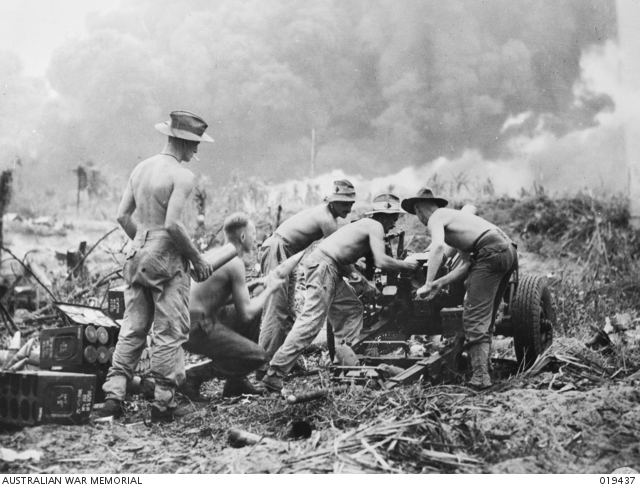
On 1 May 1945, the first wave of some 80,000 Australian soldiers, sailors and airmen began a large amphibious assault on the oil-rich island of Tarakan, beginning a massive Allied military campaign to retake areas of the island of Borneo from the occupying Japanese.
With Japan in full retreat and staring at certain defeat – what were the Australians doing there?
‘Borneo was brilliant because it was a flawlessly executed military campaign on a grand scale,’ says Michael Veitch, media personality and author of Borneo: The Last Campaign. ‘And controversial, because most historians argue that it was unnecessary.’
Codenamed Operation Oboe, the attack on Tarakan was followed 6 weeks later by amphibious landings on Labuan Island and Brunei Bay in British North Borneo, and finally on 1 July, a third assault on the oil port of Balikpapan. With American support, the Australians first neutralised the little remaining Japanese air and naval power and obliterated the beachheads through an unprecedented bombardment. This had the collateral effect of destroying some vital airstrips, oil production facilities and civilian infrastructure – the capture of which was among the stated strategic aims of the campaign.
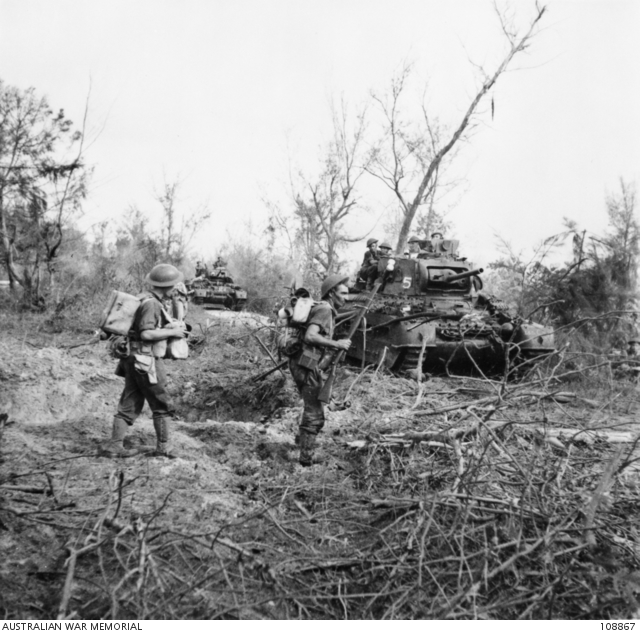
The real fighting took place in the dense jungle interior, where sheer grit went hand-in-hand with extraordinary bravery as the Australians were forced into grueling close combat to clear an intransigent enemy often more willing to die than to surrender. Our last 2 Victoria Cross recipients of the war – Corporal John Mackey VC and Private Leslie Starcevich VC – were awarded for their actions in Borneo.
Several months before Oboe even began, groups of Allied special operatives began parachuting into the interior. They made contact with the local “Dayak” people, convinced them to gather critical intelligence and trained them to join a guerilla fight. ‘It was an astonishing success,’ says Michel Veitch. ‘The Dayaks were absolutely willing to fight the Japanese, for whom they had nurtured a murderous loathing, and proved to be brilliant, natural soldiers.’
The Australians had executed a highly successful, complex, tri-service campaign grounded in excellent intelligence, planning and logistics to re-take key sites in a territory the size of NSW. They had liberated and saved thousands of local civilians from a cruel Japanese occupation.
More than 600 Australians gave their lives for it.
‘But back in Australia, you would hardly know it,’ Michael Veitch says. ‘Everyone was sick of the war and quickly losing interest in what we were still doing in the jungles up there “mopping up” the Japanese.’
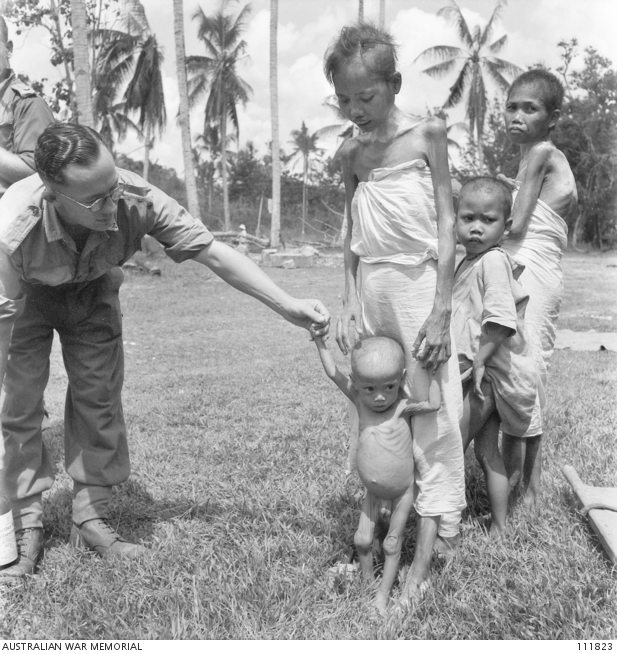
For the Australians on Borneo, the job did not end with Japan’s surrender. In the British part of the island, they pitched in on the reconstruction effort, providing medical aid to the brutalised locals, establishing schools and rebuilding devasted infrastructure. In (future) Indonesian Borneo, for 6 months they had the invidious task of maintaining security. Incredibly, in some instances this meant re-arming their Japanese POWs in an effort to keep the peace between the returning Dutch, ethnic Christians and increasingly active pro-independence Indonesian nationalists.
Just 7 weeks after Indonesia proclaimed independence on 17 August 1945, Australia sent a diplomatic mission to meet its inaugural president, Bapak Soekarno. And when the Dutch finally ceded control in December 1949, Australia recognised Indonesia’s independent statehood immediately.
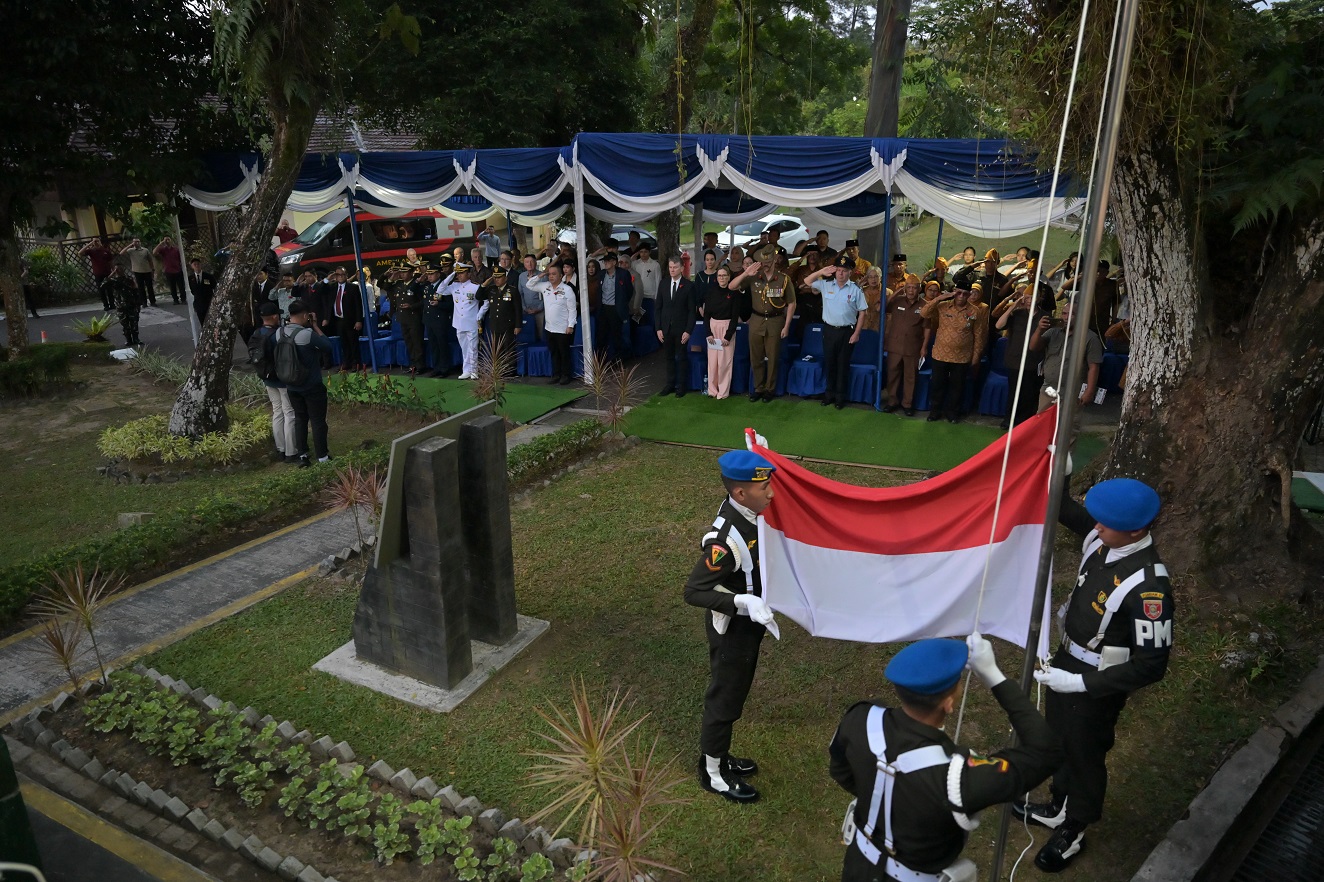
This moral, political and practical support has never been forgotten. Fast forward 80 years, and ‘the bilateral relationship and current level of engagement and trust have matured to levels I have yet to witness,’ according to Colonel David Gandy, the Australian Army’s attaché in Jakarta, who coordinates the Anzac Day Service in Balikpapan, one of 5 held across Indonesia.
‘The Balikpapan service in particular maintains a special connection with Australian military service given the magnitude and strategic importance of Operation Oboe and the ongoing connection with the local expat community,’ he says. ‘Key landmarks and military sites have been rehabilitated and preserved through a collaborative effort between the Indonesian Government, local community and the Balikpapan Anzac Day Committee, who have been key contributors to the success of the service since 1998. Key historical artefacts are kept in the local military museum, and memorials have been established throughout the town, along with remnants of a Matilda tank on Pasir Ridge, which serves as the commemorative site for the Anzac Day service.’
This year, Secretary Alison Frame represented DVA at the Anzac Day service in Balikpapan. ‘The friendship shown by the Australians towards the people of Borneo has been remembered positively,’ Ms Frame says. ‘I was touched by the respect and care shown to the places where Australians fought and died to liberate the island, and I want to especially thank the local Anzac Day committee for their dedication in organising the service every year.’
And what of our repatriated veterans? Their service was largely ignored by an Australian public mentally exhausted by 6 years of war. ‘So they kind of shut up about it,’ says Michael Veitch. ‘From the get-go, Borneo has been almost erased from the national consciousness. Since I’ve put out my book, I have been inundated with contacts from the children and grandchildren of the men who served wanting to know about what they did.’
The inscription on the headstone of one the men who served, requested by his grieving family, reads: Not just today, but every day, we remember.
Lest we forget.
To read the full story of Borneo in the Second World War, visit anzacportal.dva.gov.au/resources/borneo-1942-1945.