This article discusses experiences of war, injury and trauma. If this content raises concerns for you, free and confidential support is available from Open Arms Veterans & Families Counselling 24 hours a day on 1800 011 046.
As the 25th anniversary of Australian service in Afghanistan 2001–2021 approaches, the stories of those who served remain as important as ever. Among them are women whose experiences challenge traditional perceptions of war service, revealing not only courage under fire but also the profound personal impact of witnessing conflict firsthand.
For former Royal Australian Air Force (RAAF) Wing Commander Sharon Bown AM (nee Cooper), and former RAAF nurse and Officer-in-Charge of Australian Medical Task Force 2, Afghanistan was a lesson in the extremes of humanity.
Deployed to Tarin Kowt in 2008, Sharon led a team of 10 Air Force health personnel embedded within a Dutch-led medical facility, providing intensive care and operating theatre support to wounded coalition personnel and Afghan civilians alike.
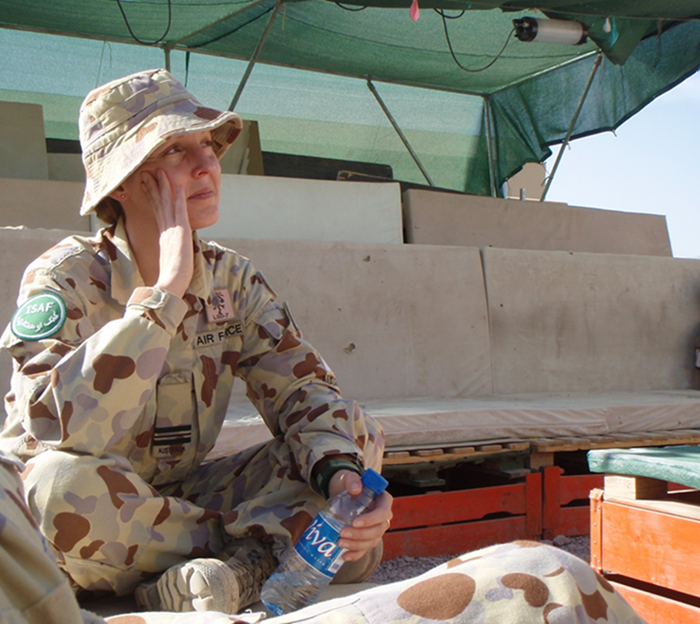
Sharon Bown AM was a Commander of a surgical/critical care team deployed to Afghanistan in 2008.
When she reflects on her deployment, it is not the military operations that stand out most clearly.
‘The human aspect,’ Sharon says. ‘Bearing witness to the horror of what humans are prepared to do to each other and yet the sincere humility of what humans are prepared to do for each other.’
After 12 years as a registered nurse, Sharon had seen suffering before. Yet war presented a different reality.
‘It was in a theatre of war that the human experience was so confronting and yet so honest.’
Despite the devastation around them, she remains inspired by the commitment of the medical teams who worked under extraordinary pressure.
‘I was inspired by my team every single day. Their ability to momentarily put the war somewhat in the background and draw upon all that they had ever learnt and known to make a difference in the lives of those that needed them.’
For Sharon, Afghanistan reinforced the value of compassion, service and teamwork. But it also left lasting questions about privilege, responsibility and the human cost of conflict.
‘The hardest thing I was required to do in Afghanistan was to leave,’ she recalls.
While she could return to the safety of Australia, the Afghan people remained behind.
‘I feel so incredibly fortunate and privileged to be an Australian, but I will forever live with the knowledge of why the people of Afghanistan, particularly the women and girls, were so desperate to leave their homeland when the Taliban returned to power.’
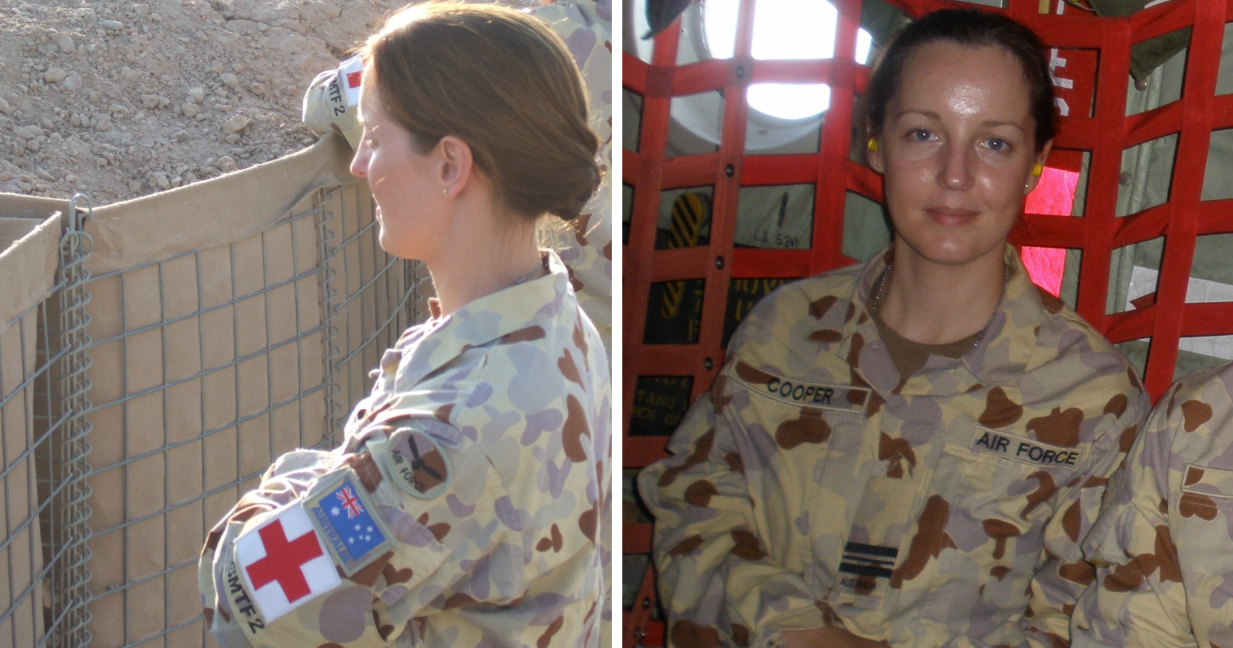
Sharon Bown in Afghanistan and returning from her deployment.
The people Sharon met still stay with her. She remembers a young Afghan interpreter who dreamed of a university education for himself and his sisters, despite opposition from his father. She remembers a father who travelled for two days with his teenage daughter seeking life-saving care. Above all, she remembers the resilience of the Afghan people and the camaraderie of Australian soldiers.
‘The bond between Australian soldiers who had faced death together, and whose concern was always for their mate before themselves.’
Despite being seriously injured in a helicopter crash in Timor-Leste in 2004, Sharon continued to serve in the RAAF until 2015 and has been a Member of the Australian War Memorial Council for the past ten years.
For Amanda Heartsong, Afghanistan was equally transformative.
Amanda arrived in the Middle East Area of Operations on 11 November 2011.
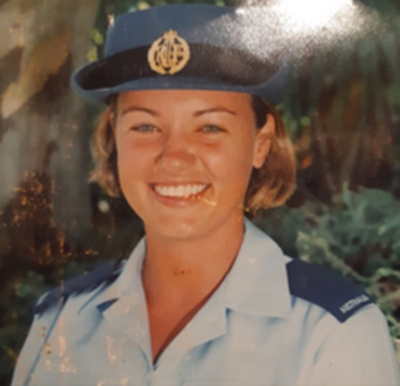
Amanda Heartsong during her RAAF days.
‘Going in to Afghanistan was an adventure. I didn’t know enough to be scared the way I should have been.’
Life in the RAAF at Kandahar Airfield quickly settled into a routine of operational demands, shared accommodation and constant vigilance. Soldiers moved everywhere in body armour with rifles slung over their shoulders.
Then came Christmas Day.
What should have been a moment of celebration became a stark reminder of the dangers surrounding them.
‘We were rocketed on three separate occasions on Chrissie day, with the Australian base being the target. I remember how dark it all felt after that.
‘Although no one was injured, the attacks changed the mood of the deployment.
‘We realised that this was really real.’
Rocket attacks became an ongoing feature of daily life. Amanda recalls lying face down in the dirt, hands covering her head, waiting for permission to run to shelters. Even after returning home, everyday sounds could trigger powerful memories.
‘The passenger-not-wearing-a-seatbelt warning in my car was like a mini rocket attack siren, and it was such a trigger for me.’
Amanda struggled under the relentless pressures of a warzone and returned to Australia a month earlier than her contingent. Years later, she speaks candidly about that experience.
‘Unfortunately, I didn’t cope in those conditions and was sent home a month before everyone else departed.’
Yet her story is also one of resilience and adaptation. The moment she arrived home remains one of her most treasured memories.
‘When I arrived home and saw my son’s happy little face at the airport, I held him and cried for about 20 minutes.’
Today, Amanda has built a life grounded in healing and connection with nature. Living on a 40-acre off-grid property, she spends her time writing, making music and exploring alternative approaches to wellbeing.
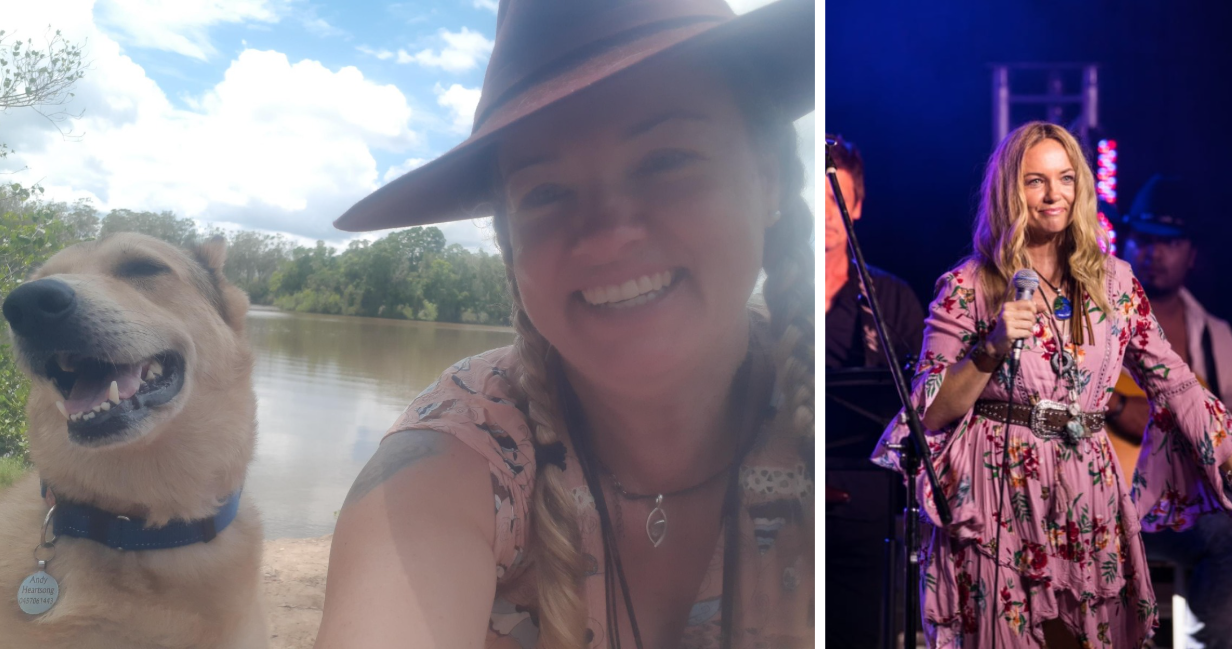
Amanda Heartsong found healing through connecting with nature and her music.
‘I know I am forever altered but I have adjusted to living as this altered being,’ Amanda said.
During Australia’s involvement in the Afghanistan War (2001 to 2021), more than 35,000 Australian Defence Force (ADF) personnel served in Afghanistan and related operations across the Middle East. Women played an increasingly important role throughout this period, serving as pilots, intelligence officers, engineers, medics, logisticians, communications specialists and other military professionals.
Their service reflected the expanding roles and contributions of women in the ADF alongside male counterparts across operational, support and leadership positions.
As Australia marks 25 years since the commencement of service in Afghanistan, Sharon and Amanda’s experiences remind us that behind every deployment are people whose lives are shaped by conflict long after their service ends. Their stories, and those of the many Australians who served alongside them, form an important part of our national remembrance.
*********
The Australian War Memorial’s Roll of Honour commemorates Australian Defence Force members who lost their lives as a result of service in Afghanistan. We honour all Australians who served, acknowledge the enduring impact of their service, and recognise the families whose unwavering support was vital throughout their service and beyond.
To mark the 25th anniversary of Australian service in Afghanistan 2001–2021, the Department of Veterans’ Affairs will hold a national commemorative service at the Australian War Memorial in Canberra on 11 October 2026. The service will also be broadcast nationally by the ABC.
For more information about the commemorative service or to register your attendance, visit: www.dva.gov.au/Afghanistan-anniversary
Visit the new War in Afghanistan gallery, featuring more than 1,000 objects, including the 'Debbie' Echo 21 Alpha Bushmaster in Anzac Hall at the Australian War Memorial.
If you need support, Open Arms Veterans & Families Counselling is available 24/7 on 1800 011 046.