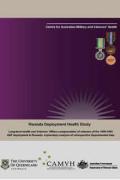
Rwanda Deployment Health Study (2014)

13 March 2026
Overview

This study aimed to examine the health and compensation outcomes of Rwanda veterans and investigate whether there were differences in outcomes between the different groups deployed.

The study undertook a data match and analysis process using personnel, compensation, health and mortality data.

Among other things, the study found that the health of the Rwanda cohort is characterised by a high rate of post-traumatic stress disorder (PTSD) that is expressed in two compensation peaks five and 11 years after the deployment.

There was no evidence of difference in discharge rates between the contingents, between personnel groups or between personnel from formed units and those who joined deployments individually.

First Author
Research Publication Type

Review of Mental Health Care in the Australian Defence Force and Transition Through Discharge

18 March 2026
Cover of Review of Mental Health Care in the Australian Defence Force and Transition Through Discharge

Review of Mental Health Care in the Australian Defence Force and Transition Through Discharge

Overview

This comprehensive report compares mental health care support in the Australian Defence Force (ADF) with world’s best practice and assessed the extent to which the mental health needs of serving and transitioning ADF members were being met.

Independent studies by Professor David Dunt

In addition to undertaking the Independent Study into Suicide in the Ex-service Community, Prof. Dunt was also appointed by the then Minister for Veterans Affairs’, the Hon Alan Griffin MP, and the Minister for Defence Science and Personnel, the Hon. Warren Snowdon MP, to undertake the Review of Mental Health Care in the ADF and Transition through Discharge.

The review was released on Friday, 1 May, 2009, along with the Government’s response.

Prof. Dunt’s comprehensive report compared mental health care support in the Australian Defence Force (ADF) with world’s best practice and assessed the extent to which the mental health needs of serving and transitioning ADF members were being met.

The review highlighted successes and gaps in the delivery of mental health programs and transition services and made 52 recommendations to improve and extend delivery of those services.

Research Publication Type
Service Period

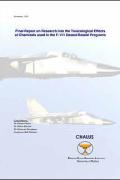
Research into the Toxicological Effects of Chemicals used in the F-111 Deseal/Reseal Programs

13 March 2026
Cover of Research into the Toxicological Effects of Chemicals used in the F-111 Deseal/Reseal Programs

Research into the Toxicological Effects of Chemicals used in the F-111 Deseal/Reseal Programs

Overview

The final report, Research into the Toxicological Effects of Chemicals used in the F-111 Deseal/Reseal (DSRS) Programs, was completed in 2005. The study was undertaken by the University of Sydney to examine the toxicological effects of chemicals used in the F-111 DSRS programs, in particular the chemical SR-51. The aims of the study were to examine the toxicological effect of SR-51 on memory loss in mice, the effect of temperature changes on the toxicity profile of SR-51 and whether SR-51 caused cancer through the process of DNA damage.

Research Provider
Research Publication Type
Service Period

Posttraumatic Stress Disorder Program Review Reports

13 March 2026
Cover of Posttraumatic Stress Disorder Program Review Reports

Posttraumatic Stress Disorder Program Review Report

Overview

The Review of PTSD Group Treatment Programs was undertaken by the Centre for Military and Veterans’ Health (CMVH) to ensure that services offered to clients of the Department of Veterans’ Affairs (DVA) were evidence-based and met the needs of both older and contemporary veteran cohorts.

This review came about following a recommendation out of the Independent Study into Suicide in the Ex-Service Community, undertaken by Professor David Dunt in 2009 comprised two phases. The first was a literature review of evidence-based best practice treatment for PTSD.

The second phase critically reviewed PTSD programs offered by providers contracted to DVA. This included the process of referral, the programs themselves, discharge planning and follow-up.

The report offers guidance on the next phase of group treatment programs and DVA will work closely with providers and the Australian Centre for Posttraumatic Mental Health to ensure treatment programs better met the needs of contemporary veterans. Changes to programs will only be implemented where more effective treatment and improved treatment outcomes for participants will be achieved.

First Author
Research Publication Type
Service Period

Peacekeepers' health study (2014)

13 March 2026
Overview

This study investigated the health of Australian veterans of deployments on United Nations sanctioned peacekeeping missions to Rwanda, Somalia, Cambodia, Namibia, Western Sahara and East Timor over the period 1989-2002.

The study examined the long-term effect of peacekeeping on the mental and physical health status, health service use and quality of life of veterans who had transitioned out of full-time service.

The study found that 65% of peacekeepers reported they were in good, very good, or excellent health.  However, 30% of peacekeepers had at least one diagnosable mental health condition.

The research provides a better understanding of the long-term pathways to care and usage of health care services for peacekeepers.

First Author
Research Publication Type

Firefighter Literature Review Report

18 March 2026
Cover of Firefighter Literature Review Report

Firefighter Literature Review Report

Overview

The two most recent Australian Defence Force Firefighter occupational health research studies are now available.

DVA commissioned an independent Occupational Health Research Studies Review Examining the Occupational Health of Firefighters (October 2017) to assess the current level of medical-scientific evidence for 12 cancers prescribed under the Safety, Rehabilitation and Compensation Amendment (Fair Protection for Firefighters) Act 2011 (Firefighters Act), plus melanoma. The review was led by Professor Nicola Fear at King’s Centre for Military Health Research, King’s College London, United Kingdom and consists of three reports:

Research Provider
Research Publication Type
Service Period

British Nuclear Testing in Australia Studies

13 March 2026
Cover page of Australian participants in British nuclear tests in Australia Vol 2: Mortality and cancer incidence

Australian participants in British nuclear tests in Australia Vol 1: Dosimetry

Cover page of Australian participants in British nuclear tests in Australia Vol 2: Mortality and cancer incidence

Australian participants in British nuclear tests in Australia Vol 2: Mortality and cancer incidence

Overview

The study to investigate the health effects of participation in the British nuclear tests in Australia is reported in two volumes.

Volume 1, the radiation dosimetry study, used data from the tests and modelling to estimate the radiation exposure of participants in the tests.

Volume 2 includes: the mortality study, which compared the number of deaths in test participants with that of the general population from the time of the nuclear tests to the end of 2001; and the cancer study, which compared the number of cases of cancer, whether fatal or not, in test participants, with that in the general population from 1982 to the end of 2001, and compared radiation exposure of participants with and without leukaemia.

First Author
Research Provider
Research Publication Type

A Review of the Operation Life Suicide Awareness Workshops

13 March 2026
Cover of A Review of the Operation Life Suicide Awareness Workshops

A Review of the Operation Life Suicide Awareness Workshops

Overview

As part of the Government response to the 'Independent Study into Suicide in the Ex-service Community', DVA commissioned the Australian Institute of Suicide Research and Prevention to undertake a review of the Operation Life Suicide Awareness workshops to ensure they were evidenced based. DVA accepted all recommendations made in the final report. 

First Author
Research Publication Type
Service Period

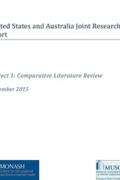
United States and Australia Comparative Literature Review

23 March 2026
Cover of United States and Australia Comparative Literature Review

United States and Australia Comparative Literature Review

Overview

This Comparative Literature Review was the first research project to involve collaboration between the Departments of Veterans’ Affairs of the United States of America (US) and Australia, and was funded by the Australian Department of Veterans’ Affairs.

The review aimed to gain an understanding of the differences and similarities between post-1990 military deployment contexts, health impacts and veterans’ health care systems in Australia and the US.

By reviewing and analysing existing research and publicly available data, the study found that:

The US deployed significantly more personnel to each of the conflicts. US personnel in the Gulf War were more likely to experience direct combat than Australian personnel. The US also maintained a longer presence in Somalia compared to Australia.

Overall rates of posttraumatic stress disorder were similar between Australia and the US.  Prevalence estimates for US veterans of Iraq tended to be higher compared to Australian veterans, and prevalence estimates for Australian Somalia veterans appeared to be higher than in US veterans.

Gulf War veterans from both countries had a reduced risk of suicide compared with respective general populations.  US veterans of Iraq and Afghanistan had high estimated rates of suicidal ideation.  

Estimates of multisymptom illness were lower for Australian Gulf War veterans compared to US Gulf War veterans.

Traumatic brain injury prevalence estimates in Australian Afghanistan/Iraq War veterans were at the low end of those reported in US studies.    

The two countries’ healthcare systems were similar in range of services, focus on mental health, and increasing use of technology. The systems were different in method of service provision and financial structure.

This study was a preliminary overview covering a range of deployments and health and social outcomes.  While it gives an accurate summary of the published literature, it did not test for the statistical significance of differences in health outcomes between different populations.
First Author
Main Topic
Research Provider
Research Publication Type