The role of meditational practices and mindfulness in improving mental health

18 March 2026
Overview

The aim of this rapid evidence assessment (REA) was to assess the evidence related to meditation and mindfulness practices (meditation, transcendental meditation, mantra, yoga, and mindfulness) for Posttraumatic Stress Disorder (PTSD), depression, anxiety, and alcohol use disorder (AUD) in adults.

First Author
Service Period

What is the effectiveness of outreach services for improving mental health?

18 March 2026
Overview

The aim of this Rapid Evidence Assessment (REA) was to assess the evidence related to outreach services for increasing quality of life, promoting access to services, and increasing functioning and mental health among adults with PTSD, depression, anxiety, adjustment disorder, alcohol-use disorder, or substance-use disorder.

First Author
Service Period

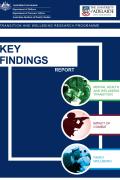
Transition and Wellbeing Research Programme - Key Findings (2020)

13 March 2026
Overview

The Transition and Wellbeing Research Programme Key Findings is the final of eight reports and two papers comprising the Transition and Wellbeing Research Programme. It summarises and consolidates the overall key findings from each of the three interrelated studies that make up the Programme: the Mental Health and Wellbeing Transition Study, the Impact of Combat Study and the Family Wellbeing Study.

This Programme constitutes a unique and valuable source of information about those who have recently transitioned from Regular ADF service (between 2010 and 2014), those who were still serving in the Regular (full-time) ADF in 2015, and those who have served on contemporary operations.

A further unique component of this Programme is its examination of the mental and physical health of ADF Reservists, in particular Abinitio Reservists who have never served in the Regular ADF.

It is also the first Australian study to specifically examine the impact of military service (not operation specific) and transition on ADF family members (partners, parents and children), whereby data were collected on both the serving member and their nominated family members contemporaneously.

The key findings presented in this report represent an overall summary of the Programme findings and should be considered in the context of prior Australian and international reports on mental health and wellbeing in both military and veteran populations.
Research Publication Type
Service Period

What are effective interventions for veterans who have experienced moral injury?

18 March 2026
Overview

Military personnel are often confronted with situations whereby under extreme conditions, they make decisions, take action or exposed to events that challenge their ethical and moral beliefs. Transgressions of ethical and moral beliefs and inner conflict can arise from such circumstances and lead to potential mental health problems. The aim of this Rapid Evidence Assessment (REA) was to examine the evidence and efficacy of interventions targeting moral injury in military personnel and veterans. Psychological and interdisciplinary therapies that may be appropriate in targeting symptoms associated with moral injury were identified and assessed for their effectiveness in treating moral injury.

First Author
Service Period
Subcategory Topic

Transition and Wellbeing Research Programme - Impact of Combat Report (2019)

16 March 2026
Overview

The Impact of Combat Report examines the changes over time in the mental, physical and neurocognitive health and wellbeing of participants of the Middle East Area of Operations (MEAO) Prospective Health Study who deployed to the MEAO between 2010 and 2012. It represents the third wave of data collection for this cohort.

This report is part of the Transition and Wellbeing Research Programme, which is the most comprehensive study undertaken in Australia on the impact of military service on the mental, physical and social health of serving and ex-serving ADF members and their families. The Programme is made up of three studies, with this report being the sole report under the Impact of Combat Study. The other two studies are the Mental Health and Wellbeing Transition Study and the Family Wellbeing Study.

The Government greatly appreciates the contribution of the serving and ex-serving members who took the time to participate in the study. Overall, results of the study suggest that the majority of the MEAO deployed cohort is healthy. Rates of psychological and physical symptoms and disorder increased over time in the cohort, however, the substantial majority remained below screening thresholds. 

First Author
Research Publication Type
Service Period

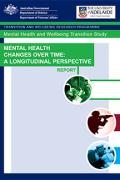
Transition and Wellbeing Research Programme - Mental health changes over time: a longitudinal perspective report (2019)

16 March 2026
Overview

The Mental health changes over time: a longitudinal perspective report examines the shifts in mental health status over a five-year period (2010–2014) in those who have transitioned out of regular, full-time military service compared with those who remain in the Regular Australian Defence Force (ADF).

This report is part of the Transition and Wellbeing Research Programme, which is the most comprehensive study undertaken in Australia on the impact of military service on the mental, physical and social health of serving and ex-serving ADF members and their families. The Programme is made up of three studies, with this report comprising part of the Mental Health and Wellbeing Transition Study. The other two studies are Impact of combat and Family wellbeing.

Research Publication Type
Service Period

Transition and Wellbeing Research Programme - Mental Health Prevalence Report (2018)

13 March 2026
Overview

This Mental Health Prevalence Report is the first of eight reports and two papers that comprise the Transition and Wellbeing Research Programme (the Programme). The Programme is the most comprehensive study undertaken in Australia on the impact of military service on the mental, physical and social health of Transitioned and 2015 Regular Australian Defence Force (ADF) members and their families (the study populations).

This report investigates the prevalence of 12-month and lifetime mental disorders, trauma exposure, suicidal ideation and self-reported mental health symptoms among Transitioned ADF members. Comparisons are also made between the self-reported mental health symptoms in Transitioned ADF with 2015 Regular ADF members and where possible, with the Australian Community.

The second report in the Programme, Pathways to Care, tells the next phase in the ADF mental health story by investigating how Transitioned ADF and 2015 Regular ADF members access, use and value mental health care services.

Research Publication Type
Service Period

Strategic Research Framework 2019-2021

18 March 2026

DVA Strategic Research Framework 2019-2021

Overview

The Strategic Research Framework (SRF) sets out the principles, objectives and priorities for DVA to facilitate research and evaluation in areas of special strength or need as identified in priority research areas. Research and analysis help to identify emerging issues facing the veteran and defence communities and their families, and are integral to developing effective departmental policy, shaping service delivery responses, and evaluating programs and pilots.

Research Publication Type
Service Period

Review of Mental Health Care in the Australian Defence Force and Transition Through Discharge

18 March 2026
Cover of Review of Mental Health Care in the Australian Defence Force and Transition Through Discharge

Review of Mental Health Care in the Australian Defence Force and Transition Through Discharge

Overview

This comprehensive report compares mental health care support in the Australian Defence Force (ADF) with world’s best practice and assessed the extent to which the mental health needs of serving and transitioning ADF members were being met.

Independent studies by Professor David Dunt

In addition to undertaking the Independent Study into Suicide in the Ex-service Community, Prof. Dunt was also appointed by the then Minister for Veterans Affairs’, the Hon Alan Griffin MP, and the Minister for Defence Science and Personnel, the Hon. Warren Snowdon MP, to undertake the Review of Mental Health Care in the ADF and Transition through Discharge.

The review was released on Friday, 1 May, 2009, along with the Government’s response.

Prof. Dunt’s comprehensive report compared mental health care support in the Australian Defence Force (ADF) with world’s best practice and assessed the extent to which the mental health needs of serving and transitioning ADF members were being met.

The review highlighted successes and gaps in the delivery of mental health programs and transition services and made 52 recommendations to improve and extend delivery of those services.

Research Publication Type
Service Period

Review of Commonwealth agencies’ relationship with the late Signaller Geffrey Gregg

18 March 2026
Cover of Review of Commonwealth agencies relationship with the late Signaller Geffrey Gregg

Review of Commonwealth agencies' relationship with the late Signaller Geffrey Greg

Overview

The Government’s response (PDF) to a review of the circumstances surrounding the death of Signaller Geffrey Gregg was published on 30 July 2008. The response outlined 15 outcomes to address systemic problems with transition out of the services.

The review of SIG Gregg’s circumstances involved three parts.

Part 1 was an independent inquiry by the Inspector General Australian Defence Force, Geoff Earley AM, which examined SIG Gregg’s Defence Service, including deployment to Afghanistan, and the ADF’s role in transition management at SIG Gregg’s discharge.

Part 2 was undertaken by Mr Chris Doogan AM (former Registrar of the High Court) and examined DVA’s actions in SIG Gregg’s transition management from the ADF, DVA’s handling of his compensation claims and the actions of the Commissioner for Superannuation in administration of SIG Gregg’s claim for military superannuation benefits.

Part 3 of the review was undertaken by Mr Ron McLeod AM (former deputy Ombudsman) to examine the whole-of-government approach to handling the Gregg case.

The Minister for Veterans’ Affairs, Alan Griffin, and the Minister for Defence Science and Personnel, Warren Snowdon, issued a media release about the Government’s response.

Research Publication Type
Service Period