Return to Vietnam triggers PTSD
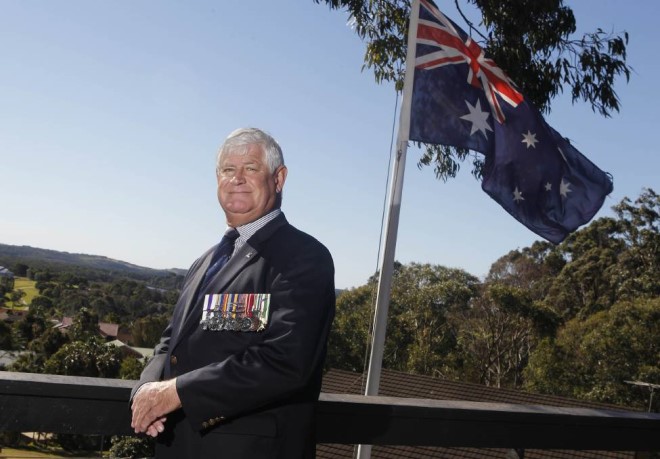
The nightmares began for Australian Army veteran and author Gary McKay when he landed in a Vietnamese jail more than 30 years after surviving near fatal gunshot wounds during the Vietnam War.
It was 2004 and he had just returned from leading an organised battlefield tour to Vietnam for fellow veterans when, unknowingly, his own battle with PTSD began.
‘The correct visa had not been organised for us to travel to sensitive sites and as a result, the interpreter and I were thrown into jail at gunpoint,’ Gary he recalls. ‘We had a 19-year-old guard with an AK-47 who kept his finger on the trigger.’
After his release and eventual return to Australia, the wartime memories came flooding back. The retired Lieutenant Colonel, who’d been conscripted to the Australian Army in 1968, always considered his 30-year military career as ‘cathartic’ when it came to Vietnam.
Especially when it came to the event that almost took his life.
It was 1971 and the 23-year-old Rifle Platoon Commander of 4th Battalion, The Royal Australian Regiment was nearly at the end of his active duty. His bravery in the Battle of Nui Le had seen him awarded the Military Cross for gallantry. It was in the aftermath of the battle, during Operation Ivanhoe, when Gary sustained gunshot wounds just millimetres from his head.
‘We were outnumbered 10 to 1,’ he says, 'I ended up getting shot twice in the shoulder and became the last Australian soldier wounded in action in Vietnam. That honour definitely wasn’t on my bucket list.
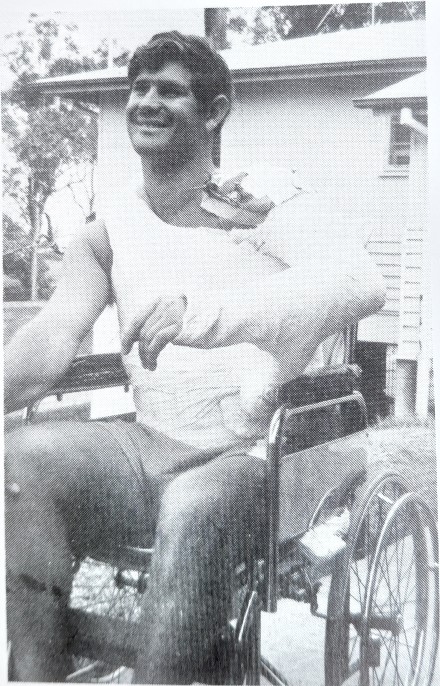
‘My shoulder had been shattered by the AK-47 rounds and I had to spend all night in the bunker system before they could get me out. If it wasn’t for the company medic, Mick Sullivan, I would have bled to death.’
Gary didn’t realise that this near-death experience in 1971 and his time in a Vietnamese jail would collide and become his trigger point for developing PTSD.
‘After I came back to Australia in 2004, the horrific nightmares began. For 14 nights straight my bed was wet with sweat, I was screaming and yelling out. I went to the Vietnam Veterans’ Counselling Service [now Open Arms] for help and after determining my eligibility for support, they referred me to a doctor who specialised in treating veterans and first responders.
‘He told me I had PTSD and it had been triggered by not being in control of the situation in jail. I didn’t believe him. I thought – I’m a hero – I’m too tough for that.’
After having a full-blown panic attack, the doctor referred Gary to a clinical psychologist who was married to a veteran.
‘After 3 to 4 months I was down to weekly visits. Dr Bob helped me to build a bridge to get to the other side.’
In honour of his fellow Vietnam veterans, he has written several books about the war, including his own autobiography: In Good Company: One Man’s War in Vietnam.
‘Through my own experiences with PTSD I became more aware of the psychological struggles of war and the effect on veterans. I used to think these blokes with PTSD were only after a pension. If you are putting people in harm’s way, you are going to have to look after them when they come back. PTSD is a normal reaction when people are put in an unreal environment where they are killing people or seeing people killed. No-one can expect them to remain unaffected. They need support.’
Over the years, as President of the Kiama-Jamberoo RSL Sub-branch, Gary has worked tirelessly to chronicle and transcribe the experiences of Vietnam veterans for the Australian War Memorial.
‘I could talk to them with empathy because I’d been there and knew what they’d been through.’
He reflects on how lucky he has been in his life and is grateful for the good place he is in now: ‘I just turned 78 but in my mind I am only 55 because I should have died in 1971.’