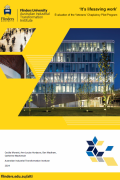
The Veterans’ Chaplaincy Pilot Program (VCPP) was established by the Department of Veterans’ Affairs (DVA) to explore the value of delivering veterans’ chaplaincy for veterans and families at the time of and following transition from the Australian Defence Force.
DVA commissioned an independent evaluation of the VCPP to assess:
the utilisation of veterans’ chaplaincy support services by transitioning veterans and their families
the effectiveness of the program in terms of impact on the veterans and families and associated services.
The evaluation was intended to inform recommendations for DVA about the delivery of veterans’ chaplaincy services to veterans and families and enhance the governance of the services, as supported by DVA’s Program Management Framework, with a view to ensuring appropriate outcomes for the veteran community. It will also transfer learnings applicable to other DVA business areas that deliver veteran support services.
The Department of Veterans' Affairs commissioned Abt Associates to undertake an evaluation of the Coordinated Veterans’ Care (CVC) Program. The evaluation was commissioned as part of a 2020-21 Budget measure which expanded access to the CVC Program for White Card holders with an accepted mental health condition. Findings from the final report will inform future improvements to veteran health care arrangements.
This report will be provided to the Department of Prime Minister and Cabinet for further consideration in the context of the Government’s response to Recommendation 72 of the Royal Consideration into Defence and Veteran Suicide Final Report.
Self-managing physical activity can be challenging and programs that help DVA clients to manage their own physical activity regimes are needed. This project developed and trialled a new physical activity support program for DVA clients called Active Choices
Findings from the REA identify strategies to support and sustain healthy behaviours as part of active ageing in Australian veterans. The research suggests that interventions that promote an active physical and cognitive lifestyle not only help prevent and combat mental and physical health decline, they also increase quality of life and well-being in later life for all veterans.
The aim of this Rapid Evidence Assessment (REA) was to examine the evidence to establish whether ageing veterans experience challenges and issues that differ from those of the general population. Also, the factors and interventions that positively affect health and wellbeing outcomes for older people (particularly those from military backgrounds).