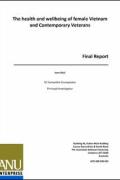
The Department of Veterans’ Affairs (DVA) commissioned Dr Samantha Crompvoets to lead a study in 2009 into the health and wellbeing of female Vietnam and contemporary veterans. The study was completed in 2012. The report’s findings were based on in-depth interviews with 60 female veterans and 30 workers in the female veteran health and wellbeing field, as well as reviews of previous research.
The ADF Service Women Steering Committee report and joint Defence/DVA response
The Departments of Veterans’ Affairs and Defence jointly established the ADF Service Women Steering Committee (the Committee) to provide recommendations for improving Defence and DVA services for current and former ADF members. The Committee’s membership included current and former soldiers, sailors and air women (regular/permanent and reserve).
The Committee considered Dr Crompvoets’ report and discussed practical ways to improve current and former ADF service women’s access to services.
The Committee concluded that there are no major gaps evident in Defence or DVA services for current and former ADF service women, but identified that there was a lack of awareness by women of available support and services.
The Committee also found that significant changes have occurred with the services provided by Defence and DVA during and since Dr Crompvoets’ study that have enhanced care and support for contemporary veterans, including female veterans, and their families.
The Committee made 24 recommendations. DVA and Defence have accepted the majority of the Committee’s recommendations and will continue to work together to improve responsiveness to the needs of women who serve or have served our nation.
The ADF Service Women Steering Committee
With approximately 14 per cent of the Australian Defence Force (ADF) being female, female veterans are making up an increasing proportion of DVA clients. In 2012, an average of 345 females served on overseas operations at any given time, with their roles including logistics, health, communications, transport, signals, engineering and intelligence. The start of 2013 saw the ADF open all employment categories to servicewomen and a new Army recruitment campaign to increase the number of women serving over the next 12 months.
More than 11 000 veterans with one or more accepted conditions under any Act administered by DVA are female. In the last few years the Department has significantly improved services for contemporary veterans, including female veterans. DVA and Defence have also recognised that female veterans have unique requirements and so have established an ADF Service Women Steering Committee to inform both departments of the specific needs of women.
The committee is co-chaired by Gayle Anderson, Assistant Secretary Service Development and Defence Relations Branch (DVA) and MAJGEN Gerard Fogarty AO, Head of People Capability, Defence. Membership includes female current and former serving members (both regular and reserve) who have deployed on operations to Somalia, Timor Leste, Iraq and Afghanistan.
The committee is considering a broad range of information, including research by Dr Samantha Crompvoets of the Australian National University which was funded through DVA’s Applied Research Program. The study, completed in 2012, was commissioned to look at the needs of the growing number of female veterans. The report from this study into the health and wellbeing of female Vietnam and contemporary veterans is available on the DVA website.
The ADF Service Women Steering Committee has met three times between May 2013 and 30 June 2013 and will continue to meet regularly until August 2013, after which the Committee will report to the Repatriation and Military Rehabilitation and Compensation Commissions with recommendations to further guide service design.