When it’s time to honour service, Harold leads the way
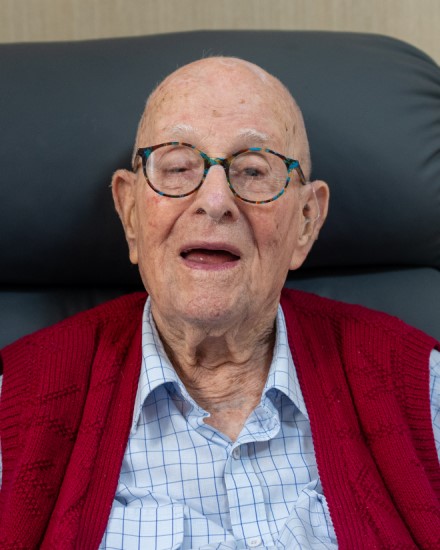
When it’s time to honour the military service of residents at his aged care home, 101-year-old Harold is always called upon to recite the Ode.
A proud Navy veteran who served on the HMAS Kanimbla in the Second World War, Harold is happily settled in a residential aged care home that offers specialised support for veterans and war widows. The facility recognises residents’ service, maintains strong links with the veteran community and provides staff training tailored to the unique needs of former service personnel.
‘The staff, by and large, know what they are doing – and they’re familiar with me, of course,’ Harold says with a smile from his favourite chair, provided by DVA while he was still living independently at home. ‘They measured me, went away and brought back a chair designed for my incredibly wonderful shape,’ he laughs.
Both DVA and the Department of Health, Disability and Ageing provide aged care ser-vices for older Australians. For veterans and war-widowed partners, My Aged Care is the main entry point to access aged care information and support – just as it is for all Australians. Through My Aged Care, the Government funds aged care homes across the country so they can provide essential care and services to residents.
DVA clients like Harold can access all ser-vices available to the general public. In addition, DVA provides extra supports where eligible, as long as these services do not duplicate what is already covered through My Aged Care or the aged care provider.
DVA helps eligible veterans and war-widowed partners remain independent at home for longer through programs such as Veterans’ Home Care, which offers domestic assistance, personal care, respite care and home and garden maintenance; and the Rehabilitation Appliance Program, which provides mobility aids and other assistive equipment.
Harold lived in his own home until the age of 98 with DVA’s support. The Department provided home maintenance, respite and convalescent care, and a mobility scooter to help him stay active and connected to his community. Harold’s aged care facility is now responsible for meeting his day-to-day needs. However, DVA can still fund customised aids and appliances beyond what the home itself is resourced to provide.
‘DVA’s doing all sorts of things,’ says Harold, touching the small sensor on his shoulder. ‘It reads my blood sugar level. Before that, I was having my finger pricked every night for blood tests. But that does it, just takes it. It’s marvellous.’
To help veterans like Harold and their families understand the support available, DVA has developed a new resource: The veteran’s guide to living in an aged care home.
The guide explains the services and pro-grams accessible to veterans in residential aged care, with a focus on recognition of ser-vice, maintaining lifestyle and wellbeing, and staying connected to friends, family and the veteran community.
You can watch Harold share his story in a video on the YouTube channel of the Department of Health, Disability and Ageing. For more information about aged care for all Australians, contact My Aged Care at MyAgedCare.gov.au or call 1800 200 422.
For details about DVA’s care at home and aged care ser-vices, visit www.dva.gov.au/aged-care or call 1800 VETERAN (1800 838 372).