From signals to speed – William “Bear” McCann and the rise of Veterans Drone Racing
Article courtesy of the Department of Defence
When former Australian Army Signals Officer William “Bear” McCann first picked up a set of FPV (First-Person View) drone goggles, he wasn’t chasing podium wins – he was searching for connection.
After serving 13 years in the Australian Army, Bear medically discharged in 2019 and experienced a loss of identity and purpose during the transition. He then found the community of drone racing and is now the driving force behind the Veterans Drone Racing Team, an organisation dedicated to helping ex-servicemen and women find connection, purpose and excitement through one of the world’s fastest-growing sports.
For Bear, drone racing is more than an adrenaline rush.
‘When I left the Army, I missed the mateship and the shared sense of purpose,’ he says. ‘I have found that again in drone racing. It’s about teamwork, challenge, and rediscovering that spark of curiosity and drive.’
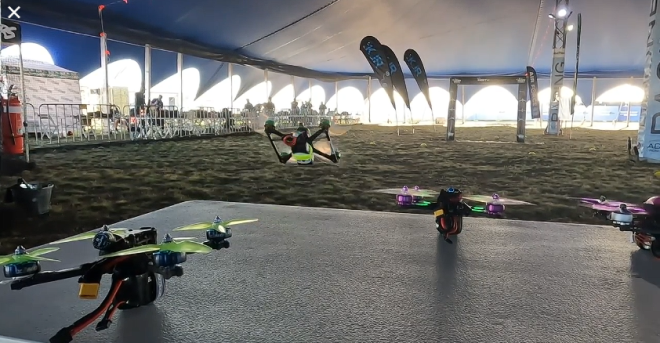
Drone racing combines technical skill with lightning-fast reflexes. Pilots wear goggles that stream live video from their drones, giving them a first-person view as they navigate obstacle courses at high speed. It’s a sport that rewards focus, precision, and creativity – qualities that many veterans naturally possess.
Bear’s journey into civilian life wasn’t an easy one. After being medically discharged from the Army, he found himself struggling to adjust. For a long time, he avoided people and crowded places, uncertain where he fit in outside of uniform. But as he spent more time building and flying drones, he discovered not just a new hobby – but a new community.
‘Drone racing gave me a place where I felt accepted and valued again,’ he shares. ‘The biggest part of it isn’t the competition – it’s the people. The community is inclusive, accepting and safe for everyone. There are no egos; we just get around each other to support and encourage.’
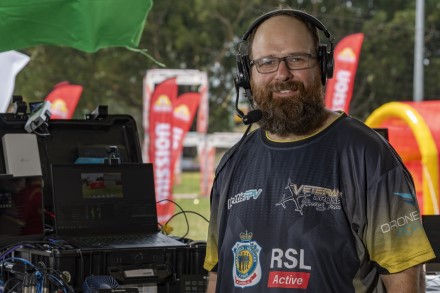
And now Bear is determined to offer that same opportunity to other veterans. ‘Veterans are used to working in teams and solving complex challenges,’ he explains. ‘Drone racing taps into that mindset. You learn, you experiment, and you do it alongside mates who’ve shared similar experiences.’
The Veterans Drone Racing Team began as a small idea: to create a space where veterans could learn, compete, and reconnect. It has grown into a thriving community of drone enthusiasts who regularly compete at local and national events.
The team pilots support each other to improve their drone racing equipment, hold regular training sessions (virtual and in-person) and team racing events that offer friendship and belonging. ‘You don’t realise how much you miss the cohesiveness and shared goals until you discharge,’ Bear explains. ‘When we race, we’re back in that environment of teamwork and drive, but this time it’s also about creativity and fun.’
Drone racing sits at the intersection of technology and sport, demanding intense concentration, rapid reflexes and a deep understanding of electronics and flight dynamics.
For Bear it’s a perfect fit, combining technical skill with mental focus: ‘I have found that when I am in the goggles flying, I am completely in the moment, and it is really a form of therapy that has been so beneficial for me.’
His passion for veteran support has also helped raise the profile of drone racing as an adaptive and inclusive sport. Bear is now working with the Invictus Games to include drone racing as a sport. Under his guidance, the team has partnered with other veteran groups, the ADF Force Drone Racing Team, and FPV racing clubs to share knowledge and create opportunities for veterans in drone racing.
Known for his calm demeanour and unwavering encouragement, Bear mentors new pilots, teaches science, technology, engineering and mathematics (STEM) workshops to school groups, and is President of the Australian FPV Association.
‘It’s adaptive, inclusive, and incredibly rewarding,’ Bear says. ‘There are many veterans who were struggling with isolation or injuries, and they have found a whole new community through drone racing. Our goal isn’t just to race drones. It’s to lift each other up and support veterans in their life after service to find a sport and hobby that is meaningful and exciting.’
Whether behind a microphone or in the goggles, Bear is continually looking for more ways to build the sport and the team. He contributes to the FPVBits YouTube channel, takes the lead as Race Director and commentator at premier drone racing events, and mentors students at a local Canberra school.
‘It’s not about winning or podium positions,’ Bear reflects. ‘It’s about finding your own success after service, be it on the race track, or stepping outside of your own comfort zone. We support each other to connect and achieve our own victories. That’s what Veterans Drone Racing is all about.’