Stacey and Lillie join forces to help veterans
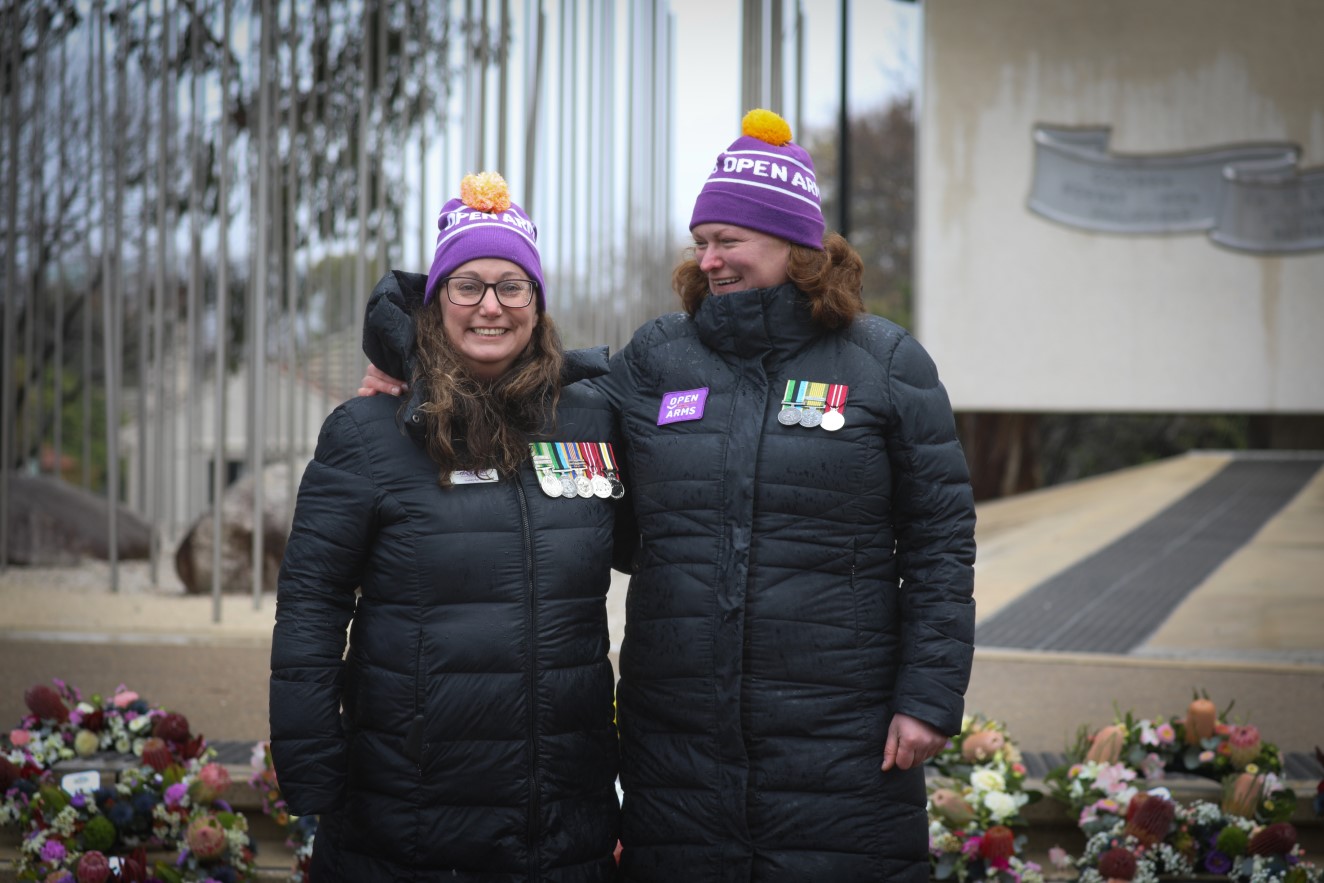
After serving together in the Army’s Psychology Corps, Stacey and Lillie have again joined forces to help veterans struggling with their mental health.
Open Arms clinician Stacey and Lived Experience Professional (Peer) Lillie are part of a nation-wide team helping veterans and their families make the successful transition from full-time service to civilian life.
‘I find the most useful part about working with a Peer like Lillie is the wrap-around support to reinforce or support the client with the strategies we are on working on in sessions, such as building social networks or engaging in hobbies,’ Stacey explains. ‘Clients really value input from Peers as they have often walked a similar path.’
Lillie says Peers use their lived experience to help clients build social connection and hope:
‘I’ve done a bit of work supporting clients to get out of the house. It can be hard for people to do. I have had feedback that if someone is there to meet you and walk beside you it makes it easier. Peers have also served, so we can share advice with clinicians who might not understand what service life is about and how the intricacies of rank, moving families and the role of your job in the miliary affects people.’
Both Stacey and Lillie are proud of their service and to be working in the veteran space. Lillie helped support tri-service personnel for over a decade in 1 Psych Unit.
‘My father was a Vietnam veteran whose life was changed for the better by Open Arms,’ she said. ‘I wanted to continue to serve in some way and help other veterans and their families.’
Stacey, now an active Reservist, says her background helps her to better understand the challenges of transitioning to civilian life. ‘My transition from full-time service was positive overall, but there were still some tough parts,’ she said. ‘We know that’s not the case for all serving members.’
Both can easily empathise with veterans who lose their sense of purpose after leaving Defence.
And they agree on some of the more common challenges during transition. These include finding employment outside Defence, integrating into new communities, navigating a different medical system, finding housing, enrolling kids in a new school or even establishing a new family dynamic.
Stacey says it is very important for veterans to establish a routine, stay active and socially connected before, during and after transition: ‘Attending an Open Arms Stepping Out Program can provide them with the information and skills to better manage their transition to civilian life.’
She also recommends veterans do something formal or informal to mark the end of their service:
‘Whether it’s attending a Last Post ceremony, gathering with loved ones or going on a holiday, do something meaningful to mark this important transition in your life. Defence marks the start of your service with a swearing in ceremony; it’s fitting to do the same at the end of your service.’
Lillie recommends veterans make a conscious choice to show respect, care and connect with their loved ones every single day. ‘The military may have hardened some edges of your personality so consciously work to soften those edges,’ she recommends.
‘There are many support services available to you and your family as a veteran. Seek them out – the sooner the better. Life as a civilian can be just as rewarding and fulfilling as life in the services.
‘If you have a family, create a shared vision of your life after service and work towards it. If you are single, invest in your own financial prosperity while you are in [the ADF] to give you more options in the future.’