Tomorrow, on the 110th anniversary of the quiet, staged withdrawal from Gallipoli (the most successful Allied operation in the Gallipoli campaign), we remember the bravery and sacrifice of those Australians who served at Gallipoli in the First World War.
On 13 November 1915, after 7 months of stalemate on the Gallipoli battlegrounds, Field Marshal Lord Kitchener, Britain’s Secretary of State for War, arrived at Anzac Cove to survey the Anzac position for himself. The Allies had little chance of success. Following consultation with senior commanders, Kitchener made the recommendation to evacuate Gallipoli. On 8 December 1915, the British War Cabinet finally decided to end the campaign.
Planned down to the finest detail, the operation required the utmost secrecy. Calculations were made evaluating what proportion of troops should, and could, be safely withdrawn from each division. It was determined the evacuation would be carried out in 3 stages.
The movement of troops took place entirely after dark, with elaborate precautions undertaken for a ‘sight unseen’ evacuation. Should Turkish forces discover the withdrawal, the immediate and most feared consequence would be heavy shelling of the beach.
Many thought a withdrawal would result in heavy casualties. However, comprehensive deception efforts, including sporadic rifle and artillery fire throughout the withdrawal, resulted in only a handful of lives lost. Troops even rigged rifles to automatically fire off shots to continue the deceit as long as possible after the last troops left the peninsula.
Between 8 and 20 December 1915, 90,000 men were secretly evacuated from Suvla Bay and Anzac Cove, while a similar evacuation of British forces was conducted at Helles over 8 and 9 January 1916.
The evacuation weighed heavily on many, knowing they were leaving behind the bodies of comrades, mates and in some cases brothers who had died and been buried there.
On 19 December, as he waited to go, Company Quartermaster Sergeant A L Guppy, 14th Battalion, of Benalla, Victoria, confided his feelings in verse to his diary. His words echoed the sentiments of many that day:
Not only muffled is our tread
To cheat the foe,
We fear to rouse our honoured dead
To hear us go.
Sleep sound, old friends- the keenest smart
Which, more than failure, wounds the heart,
Is thus to leave you- thus to part,
Comrades, farewell!
[Guppy, quoted in B Gammage, The Broken Years – Australian Soldiers in the Great War, Penguin Books, 1975, p.110].
On 20 December 1915 at 4.10 am, the last boat left.
Right until the end, the Anzacs believed the Turkish remained unaware a major evacuation had taken place.
On the 110th anniversary of the Gallipoli withdrawal, we remember the Australian men and women who fought to achieve victory in the First World War.
Lest we forget.
To learn more about the remarkable Gallipoli evacuation, visit our Anzac Portal.
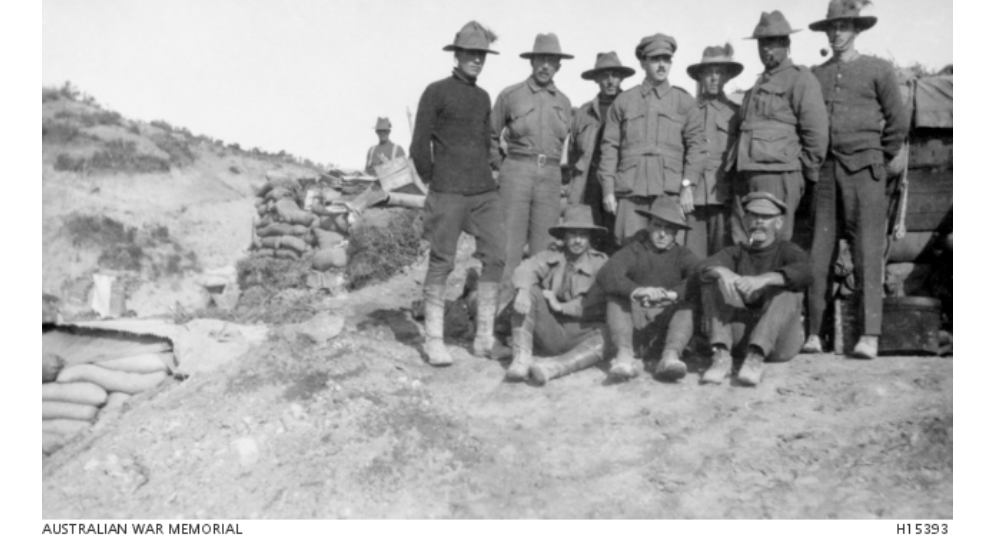
Gallipoli, Turkey. 1915. A group of members of the 1st Light Horse Brigade Train, AIF. These men were the last of their unit to leave Gallipoli at the evacuation.
Image courtesy of the Australian War Memorial