The VETS Act – what it is and what it does
On this page
What changed?
The VETS Act closes the Veterans’ Entitlements Act 1986 (VEA) and Safety Rehabilitation and Compensation (Defence-related Claims) Act 1988 (DRCA) to new claims from 1 July 2026. From this date, all compensation and rehabilitation claims will be determined under a single ongoing Act – the improved Military Rehabilitation and Compensation Act 2004 (MRCA).
All claims lodged under the VEA and/or DRCA prior to 1 July 2026 will remain valid and will be assessed and decided under those Acts.
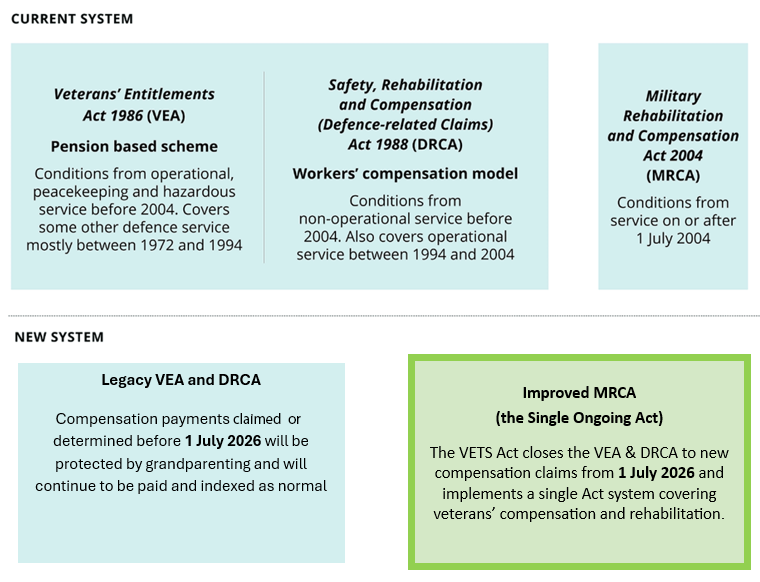
Figure 1 – Current and new legislation pathway.txt (TXT: 2 KB)
Amendments to the MRCA
- Single Act – all new claims for compensation and rehabilitation will be considered under an improved MRCA.
- Closing the VEA and the DRCA to new claims for compensation and rehabilitation. Payments being received under the VEA and DRCA have been grandparented, which means they will continue uninterrupted.
- Various beneficial provisions which operated differently across the MRCA, DRCA and VEA have been standardised. This includes retaining war widow/er auto-grants, and posthumous grants of Permanent Impairment compensation.
Further information on the amendments is available in Schedule 1 of the Explanatory Memorandum.
Enhancements
The Act has enhanced the MRCA for various entitlements. Enhancements include:
- The introduction of a new Additional Disablement Amount (ADA), similar to the Extreme Disablement Adjustment (EDA) available under the VEA. Like the EDA, the ADA compensates veterans who are Age Pension age or older and who have a high degree of incapacity due to service-related conditions.
- The legislated ability for the Repatriation Commission to specify injuries and diseases that can be determined on a presumptive basis where they are known to have a common connection with military service. The legislative instrument covering presumptive liability conditions is available on the federal register of legislation.
- Expanded eligibility for Household Services and Attendant Care.
- Retention of automatic granting of VEA funeral benefits.
- An increase to $3,000 for funeral allowance for previous automatic grant categories under the VEA, and the availability of reimbursement of funeral expenses up to $15,530.09 for all service-related deaths.
- The availability to all veterans of the higher travel reimbursement amount, regardless of kilometres, when a private vehicle is used to travel for treatment.
- Standardisation of allowances and other payments, including: acute support packages, education schemes and additional compensation for children of severely impaired veterans.
- Where the Repatriation Medical Authority updates a Statements of Principles (SoP) between the veteran’s primary and reviewable decision, the version of the SoP which is most beneficial will be applied.
- The definition of service injury has been amended to allow for an injury to be accepted on the basis that it occurred while the person was ‘on duty’ as a defence member (such as heart attacks and strokes), regardless of whether or not the injury was caused by the member’s duties.
Further information is available in Schedule 2 of the Explanatory Memorandum.
Single Review Pathway – review mechanism for compensation decisions
This reform, enacted on 21 April 2025, aligns compensation decisions across the three Acts.
Initial review of decisions made under the DRCA go through the Veterans’ Review Board (VRB), rather than the Administrative Review Tribunal (ART). The VRB is a more veteran-friendly, less adversarial setting than the ART. VRB decisions can be appealed at the ART, though veterans will need legal representation.
Further information is available on the Single Review Pathway page and in Schedule 3 of the Explanatory Memorandum.
Defence and Veterans’ Service Commission
During the passage of the VETS Act through the Senate, the Bill was amended to include a new Schedule 9 which amends the Defence Act 1903 (Defence Act) to establish the Defence and Veterans’ Services Commission (the Commission). The establishment of the Commission was recommended by the Royal Commission into Defence and Veteran Suicide in recommendation 122 of its Final Report. The relevant provisions establishing the Commission commenced on 29 September 2025.
The amendments include two important review provisions in relation to the establishment of the Commission.
The first of these is Section 5 of the VETS Act, which provided that the Senate Foreign Affairs, Defence and Trade Legislation Committee review the legislation establishing the Commission and report by 29 August 2025. On 17 January 2025, the Government appointed Mr Michael Manthorpe PSM as the Interim Head of the Defence and Veterans’ Service Commission. Mr Manthorpe worked with the Senate and the Government during this period on the review of the legislation prior to its commencement.
The second of these review provisions is new Section 110ZLE of the Defence Act, which provides for an independent review of the operation of this Part to be undertaken 36 months after commencement of the relevant provisions on 29 September 2025.
These review processes provided the opportunity for the veteran community to be further consulted on this important legislation.
Learn more on the Defence and Veterans’ Services Commission website.
Merging Commissions (streamlining the governance arrangements)
Because there were multiple Acts, there were two commissions overseeing the granting of pensions, allowances and other benefits under the VEA/DRCA and MRCA. These were the Repatriation Commission and Military Rehabilitation and Compensation Commission (MRCC).
The improved MRCA streamlined the administration of the legislation by merging the MRCC into the Repatriation Commission, removing duplication of responsibilities, and providing greater administrative clarity about governance matters. Further information is available in Schedule 4 of the Explanatory Memorandum.
Repatriation Medical Authority and Specialist Medical Review Council
To enable the change, governance of the Repatriation Medical Authority and the Specialist Medical Review Council was transferred into the MRCA. There have been no changes to the functions or powers of either body. Further information is available in Schedule 5 of the Explanatory Memorandum.
Disability compensation payments
When a veteran receiving a disability compensation payment (DCP) dies, the payment and allowances stop at the end of the fortnightly pay period before the date of death. Schedule 6 of the Explanatory Memorandum changes the final date of payment of DCP (and associated allowances) to be the veteran’s date of death.
Application and transitional provisions
The interaction between the law as it was prior to 1 July 2026, and the law as it is now, are contained in Schedule 7 of the Explanatory Memorandum. In addition, transitional provisions are also included, which help the transition from one set of rules to another. For example, the transitional provisions outline how undetermined claims on the day of commencement will be handled.
Back to topExplanatory Memorandum
For a full explanation of each of the specific features of the improved MRCA, the full Explanatory Memorandum can be found on the Explanatory Memorandum page.
Back to top